Hey everyone! As a long-time LEGO enthusiast, I totally get it. You’ve just gotten your hands on a brand-new set, maybe one of those incredible, super detailed creations that looks like it belongs in a museum, and your mind immediately jumps to two things: first, the pure joy of building, and second, “Just how long is this masterpiece going to take?” It’s a question I’ve heard countless times, from fellow Adult Fans of LEGO (AFOLs) in online forums to friends eyeing a complex set as a weekend challenge.
I’ve personally dedicated untold hours to snapping bricks, building everything from sprawling modular buildings to intricate Star Wars ships, and believe me, the estimated build time on the box is often just the beginning of the story.
The truth is, understanding and comparing LEGO build times isn’t as simple as it might seem. There are so many fascinating factors at play, from the sheer piece count and the complexity of the instruction manual to your personal building style, whether you’re sorting meticulously or just diving in headfirst.
With LEGO continually pushing the boundaries of design and engineering, creating truly mind-bending display pieces and challenging models for us grown-ups, really knowing what influences your build journey has become a hot topic.
It’s not merely about how fast you can finish; it’s about optimizing the experience, embracing the challenge, and ultimately, savoring that incredible moment of completion.
If you’ve ever found yourself pondering how long that dream set will *truly* occupy your time, or how your own build pace measures up against the global LEGO community, then you’re in for an absolute treat.
Let’s delve deep and uncover all the intriguing secrets behind LEGO build times together!
The Unseen Variables of Piece Count
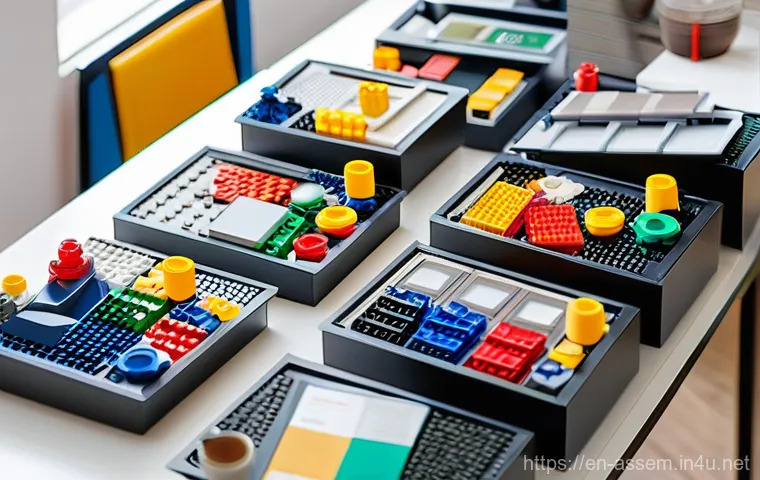
Okay, so you pick up a LEGO box, and the first thing you probably spot, right after that glorious image of the finished model, is the piece count. It seems like the most straightforward indicator of how long you’ll be building, doesn’t it? A 3,000-piece set surely takes longer than a 1,000-piece one. And while that’s generally true, I’ve learned from countless builds that it’s far from the whole story. I’ve personally tackled massive sets with fewer unique pieces that flew by, and then scratched my head over smaller sets packed with tiny, intricate elements that felt like they took forever. It’s a delightful deception, really, designed to make you think you know what you’re getting into, only for the actual building journey to unfold in unexpected ways. The piece count is just the cover of the book; the real story is in the pages.
It’s Not Just About the Number
When I first started seriously building as an adult, I used to obsess over the piece count, almost as a badge of honor. “Look at this 5,000-piece monster I just finished!” But I quickly realized that not all pieces are created equal. A set full of large, classic bricks, even if there are thousands of them, often comes together much faster than a set with a lower piece count but an abundance of tiny Technic pins, gears, or highly specialized decorative elements. Think about the difference between constructing a large, blocky castle wall versus assembling the intricate engine of a Technic supercar. Both can have high piece counts, but the cognitive load and dexterity required for the latter can significantly extend the build time. It’s like comparing a marathon run on a flat track to one through a dense obstacle course; the distance might be similar, but the challenges are vastly different.
The Hidden Complexity of Small Parts
Oh, the tiny parts! We’ve all been there, haven’t we? You open a bag, and suddenly you’re staring at a sea of 1×1 plates, cheese slopes, and grille tiles. My eyes, which used to effortlessly pick out pieces, now sometimes need a magnifying glass for these minuscule marvels. These small elements, while brilliant for adding detail and texture, demand a level of precision and patience that larger bricks just don’t. Sorting through them, snapping them into place, and ensuring perfect alignment can turn a seemingly simple step into a five-minute endeavor. I remember building a massive modular building where the sheer volume of tiny decorative elements for the facade added hours to the build time, even though individually they were quick snaps. It felt like an endless quest for that one elusive tiny piece, lurking amongst its identical brethren. This “mini-piece fatigue” is a real thing, and it definitely pushes up the clock.
Navigating the Instruction Manual Maze
Ah, the LEGO instruction manual. For many of us, it’s not just a guide; it’s practically a sacred text. When I tear open that box, the smell of fresh plastic and the sight of those glossy pages are almost as exciting as the bricks themselves. But have you ever noticed how much the *quality* and *layout* of those instructions can impact your build time? I certainly have. Some manuals are a dream: clear, concise, and intuitive, almost guiding your hands. Others feel like a cryptic puzzle, forcing you to squint at subtle color changes or search for that one tiny piece in an overwhelming diagram. It’s a journey, sometimes a smooth cruise, sometimes a bumpy off-road adventure, and how well the manual is designed truly dictates the pace of that trip. It’s not just about following steps; it’s about interpreting a visual language.
Deciphering the Visual Language
I’ve built enough LEGO sets to have developed a keen eye for instruction manual nuances. There’s an art to designing these guides, making complex assemblies understandable through simple, color-coded steps. I’ve found that manuals that highlight new pieces for each step, or clearly demarcate sub-assemblies, are incredible time-savers. On the flip side, I remember one particularly challenging experience with an older set where the colors in the manual were so close to each other that differentiating between dark gray and black bricks became a frustrating guessing game under normal lighting. I practically needed to hold the book up to the sun to be sure! Those moments, when you’re second-guessing every single placement, definitely add significant minutes, if not hours, to the overall build. The smoother the visual flow, the smoother your build will be.
The Impact of Digital vs. Physical Instructions
In our increasingly digital world, LEGO has also embraced app-based instructions, and I’ve given them a fair shot. While the ability to zoom in and rotate models is incredibly helpful for complex structures, especially when you’re trying to figure out a tricky angle, I’ve found that I personally prefer the tactile experience of a physical manual. There’s something about spreading out the pages, flipping them at my own pace, and not having to constantly interact with a screen that keeps me more immersed. Plus, the constant switching between my tablet and the bricks can break my concentration. However, for some of my friends, the digital experience is a game-changer, especially those with limited building space. They love the dynamic views and the way it can clarify ambiguities. It really boils down to personal preference, but I’ve noticed a slight uptick in my time when I go digital, perhaps because it introduces an extra layer of interaction I’m not used to.
Your Personal Building Style: Speed Demon or Meticulous Master?
This is where things get really personal, isn’t it? We all have our unique quirks when it comes to building LEGO. Are you the type who just rips open all the bags, dumps them out, and dives straight into the colorful chaos? Or are you a meticulous sorter, arranging every plate, brick, and pin into neat little piles before you even snap the first two pieces together? I’ve seen both approaches in action, and honestly, there’s no “right” way, but there’s definitely a way that suits you best, and importantly, a way that affects your build time. Over the years, I’ve experimented with different methods, and I’ve come to understand how my own temperament plays a huge role in how quickly (or slowly, wonderfully slowly!) a set comes together. It’s a reflection of our personality, truly.
The Sorter’s Advantage
I’ll admit, for the longest time, I was a ‘dump and build’ kind of guy. “Who has time to sort?” I’d think, eager to get my hands on those bricks. But then I started building more complex sets, and the sheer frustration of endlessly searching for a specific piece finally broke me. Now, for larger sets, I’ve embraced a hybrid sorting method. I don’t sort *everything* by color and size, but I definitely sort by bag number, and often, within those bags, I’ll separate out the very small pieces onto a separate tray. What a difference that has made! While the initial sorting adds a bit of time upfront – maybe 15-30 minutes for a big set – it dramatically reduces the time spent hunting for pieces during the build itself. I’ve found my overall build time for a 2,000-piece set can be cut down by an hour or more simply by taking that initial sorting step. It transforms the experience from a treasure hunt into a satisfying assembly line.
The “Dump and Build” Approach
On the other hand, I have friends who swear by the “dump and build” method, even for massive sets. They love the chaotic energy of digging through a pile of bricks, discovering pieces almost by chance. For them, the search is part of the fun, an engaging aspect of the building process itself. They argue that sorting feels like a chore, an unnecessary delay to the immediate gratification of building. While I admire their zen-like patience in the face of brick avalanches, I’ve personally seen their build times stretch significantly longer than mine on comparable sets. The constant stopping, searching, and sifting through pieces definitely adds up. It really highlights that what you value in the building process – efficiency vs. serendipity – directly impacts how long that masterpiece takes to construct. For smaller, less complex sets, I’ll still occasionally indulge in a good old-fashioned dump-and-build, just for nostalgia’s sake!
Beyond the Bricks: The Role of Environment and Mood
You know, it’s funny how much our surroundings and our mental state can influence something as seemingly straightforward as building a LEGO set. I’ve had days where I’m in a perfectly organized, quiet space, feeling refreshed and ready to tackle anything, and a complex set just *flows* together. Then there are other days, maybe after a long day at work, with distractions buzzing around, and even a simple bag of bricks feels like an insurmountable challenge. It really goes to show that LEGO building isn’t just about the physical act of snapping bricks; it’s an immersive experience that’s deeply tied to our environment and our emotional well-being. My best building sessions often happen when I’ve curated the perfect atmosphere, almost like setting the stage for a grand performance.
Setting the Scene for Success
I’ve discovered that creating the right environment is half the battle for an efficient and enjoyable build. For me, that means a well-lit, clutter-free table, a comfy chair, and usually some background music – nothing too distracting, just something to set a calm, focused mood. When I have all my tools at hand (like my trusty brick separator, a true lifesaver!), and enough space to spread out bags and instruction manuals, the entire process feels smoother. I remember trying to build a new botanical set on a small coffee table amidst dinner prep, and it was a disaster! Pieces were everywhere, I kept losing my place, and the aroma of cooking became more distracting than pleasant. Compare that to a weekend morning, with a fresh cup of coffee and my dedicated building space, where hours can melt away without me even noticing. The difference in my progress, and my enjoyment, is night and day.
When Life Gets in the Way
Let’s be real, life happens. We don’t always have the luxury of uninterrupted building bliss. I’ve started many sets with grand intentions, only to have them sit half-finished on a shelf for days, or even weeks, because of work, family commitments, or just plain old fatigue. Each time I come back to it, there’s a moment of re-orientation – “Okay, where was I? What was I doing?” – which inevitably adds to the overall time. I vividly recall building the massive LEGO Millennium Falcon, a true beast of a set. It took me over two months, not because it was incredibly difficult, but because I could only dedicate an hour or two here and there. Those pauses, the need to re-familiarize myself with the steps and the current structure, definitely accumulated. It made the final completion even more satisfying, but it absolutely stretched the build time far beyond what someone with dedicated uninterrupted hours would experience.
The Intricacy Factor: When Simple Bricks Become Complex Structures
You might think a 2×4 brick is just a 2×4 brick, right? Simple, straightforward. But in the hands of LEGO designers, those fundamental pieces, along with a myriad of specialized elements, can be combined in ways that are truly mind-bending. The complexity isn’t always about the sheer number of bricks; it’s about *how* those bricks interact, the hidden mechanisms, the ingenious structural engineering, and the clever part usage that goes into a set. I’ve found that some sets, despite having a moderate piece count, can demand a level of focus and problem-solving that pushes my build time far beyond what the box might suggest. It’s like discovering a secret language within the LEGO system, where every connection tells a story of engineering brilliance.
Advanced Techniques and Their Time Cost
Modern LEGO sets, especially those aimed at adult builders, are packed with advanced building techniques that can be incredibly satisfying to construct but definitely add to the time. Think about SNOT (Studs Not On Top) techniques, where bricks are built sideways or upside down to create smooth surfaces or unique textures. Or intricate Technic gearboxes that require precise alignment of dozens of tiny pins and axles. I remember working on a Creator Expert car where the engine assembly alone felt like building a miniature Rube Goldberg machine. Each connection had to be perfect, or the whole mechanism wouldn’t function. These moments of intense focus, where you’re carefully counting studs, triple-checking alignments, and sometimes even dismantling sections to correct a tiny error, are significant time sinks. But, oh, the satisfaction when it finally clicks into place and works perfectly is absolutely unparalleled!
Repetitive Builds: Blessing or Curse?
Then there’s the phenomenon of repetition. Some sets, particularly large display models like mosaic art or expansive modular building facades, involve a lot of identical or very similar sub-assemblies. This can be a double-edged sword. On one hand, once you’ve built the first identical section, you become incredibly efficient at the subsequent ones. Your hands remember the movements, and your brain goes into a sort of meditative state. I’ve cruised through sections like this, almost hypnotized by the rhythm of building. On the other hand, it can also lead to a bit of mental fatigue or boredom if you’re not in the mood for repetitive tasks. I’ve found that for these types of builds, breaking them into smaller sessions or listening to a good podcast helps keep me engaged. While the individual repetitive steps might be fast, the sheer volume of them can still make these sets quite time-consuming overall, sometimes more so than a set with higher but more varied complexity. Here’s a little snapshot of how complexity often impacts my personal build times:
| Set Type (Example) | Approx. Piece Count | My Estimated Build Time | Key Complexity Factors |
|---|---|---|---|
| Small Creator Vehicle | 150-300 | 1-2 hours | Relatively straightforward, few advanced techniques |
| Mid-size City/Friends Set | 500-1000 | 3-6 hours | Modular sections, some interior details |
| Modular Building (e.g., Bookstore) | 2500-3500 | 15-25 hours | Intricate facades, detailed interiors, SNOT techniques |
| Large Technic Model (e.g., Lamborghini Sián) | 3000-4000 | 20-35 hours | Complex gearboxes, engines, working steering, repetitive elements |
| Ultimate Collector Series (e.g., Millennium Falcon) | 7000-8000 | 40-60+ hours | Massive scale, highly detailed greebling, internal structures, many tiny pieces |
When the Clock Isn’t Ticking: The Joy of a Leisurely Build

Sometimes, the estimated build time on the box becomes utterly irrelevant, and for all the best reasons. We live in a world that constantly pushes us for speed, efficiency, and instant gratification. But with LEGO, I’ve often found that the most profound joy comes not from how fast I can finish a set, but from how deeply I can immerse myself in the process. There’s a beautiful freedom in deciding that the clock isn’t ticking, that this isn’t a race, and that the true value lies in savoring every single snap, every tiny detail, and the gradual emergence of something wonderful from a pile of plastic bricks. It’s a deliberate act of mindfulness, a way to disconnect from the hustle and bustle and just *be* with the bricks.
Embracing the Process
I remember one specific weekend when I decided to tackle a particularly beautiful botanical set. Instead of trying to power through it, I approached it with a completely different mindset. I laid out all the bags, sorted the pieces loosely by color, and put on some calming music. I took breaks, sipped tea, and admired the intricate designs as they came together. I spent extra time just marveling at how different elements were cleverly used to create natural forms. This wasn’t about speed; it was about the experience. The set probably took me twice as long as it “should” have, but it was one of the most relaxing and rewarding builds I’ve ever done. That feeling of slowly bringing a creation to life, understanding the designer’s intent, and appreciating the engineering, is, for me, the very essence of LEGO. It’s a wonderful reminder that sometimes, the journey truly is more important than the destination.
Display vs. Play Sets: Different Motivations
The purpose of a set also plays a huge role in how I approach its build time. If I’m building a massive display piece, like one of the architectural marvels or a Star Wars UCS ship, I’m often more meticulous. I want every tile perfectly aligned, every connection solid, because this is something I’m going to proudly showcase. I’ll take my time, double-check steps, and really focus on the aesthetic outcome. On the other hand, if I’m building a smaller vehicle or a playset that my nephew will be zooming around the living room in five minutes, my approach is usually a bit more brisk. The goal then is more about getting it ready for immediate play, and while I still want a solid build, the absolute pursuit of perfection takes a backseat to getting it into tiny, eager hands. These differing motivations inherently shift my internal clock and thus, the actual time it takes to finish.
Maximizing Your LEGO Building Experience and Time
So, we’ve talked a lot about the various factors that influence how long it takes to build a LEGO set, from piece count to your personal quirks. But beyond just understanding *why* builds take the time they do, how can we actually optimize that experience? For me, it’s not always about making it faster, but making it *better* – more enjoyable, less frustrating, and ultimately, more rewarding. It’s about finding that sweet spot where efficiency meets enjoyment, ensuring that every hour spent with bricks is an hour well spent. I’ve picked up a few tricks over my years of building that I think can truly enhance anyone’s LEGO journey, whether you’re a seasoned AFOL or just starting out on your first big set.
Tools and Tips for Efficiency
One of the simplest yet most impactful tips I can give you is to invest in a good brick separator (or several!). Those little orange tools are absolute marvels for correcting mistakes without damaging your nails or the bricks themselves. Trust me, spending five seconds to grab the separator is far better than struggling for minutes with a stubborn plate. Another game-changer for me has been using small sorting trays or even just disposable plastic bowls for individual bag contents. It keeps things organized, especially when you’re dealing with those tiny, easily lost pieces. I also find that building in good, natural light makes a huge difference; it helps distinguish colors and spot those subtle connections in the instructions. And finally, don’t be afraid to take breaks! A five-minute stretch can refresh your eyes and mind, preventing fatigue and those frustrating mistakes that inevitably extend your build time.
Making the Most of the Journey
Ultimately, LEGO building should be fun. It’s a hobby, a passion, a creative outlet. Don’t let the “estimated build time” on the box dictate your enjoyment. I’ve learned to view these times more as a loose suggestion rather than a strict deadline. If you want to blast through a set in one sitting, go for it! If you prefer to savor it over several evenings, that’s perfectly fine too. The key is to listen to your own pace and enjoy the ride. I always encourage fellow builders to personalize their experience – maybe put on a favorite podcast, stream a movie in the background, or even build with a friend or family member to share the joy. The stories and memories we create around our LEGO builds are just as valuable as the finished models themselves. So, embrace the challenge, celebrate the progress, and most importantly, have an absolute blast snapping those bricks together!
Wrapping Up Our LEGO Journey
As we’ve journeyed through the fascinating world of LEGO build times, it’s become clear that the clock is truly just one of many companions on our creative adventure. What I’ve learned, time and time again, is that the magic of LEGO isn’t confined by minutes or hours, but by the joy, the challenge, and the sheer satisfaction we derive from the process. Each click of a brick, every moment spent deciphering instructions, and even the occasional hunt for that elusive piece, all contribute to a unique and deeply personal experience. I genuinely believe that whether you’re a speed builder or a meticulous master, the ultimate goal is the same: to create something wonderful and to enjoy every step of its creation. So, let’s not get too hung up on estimated times, because the real value lies in the memories we build, not just the models. After all, isn’t that why we love this hobby so much? It’s a chance to escape, to focus, and to bring imagination into tangible form, one brick at a time.
Handy Tips for Your Next Build Session
Over my years of diving deep into countless LEGO sets, I’ve picked up a few invaluable tidbits that I genuinely wish I knew when I first started. These aren’t just about building faster, but about making the entire experience smoother, more enjoyable, and less prone to those little frustrations that can sometimes sneak in. Think of these as little nudges towards a more zen-like building adventure.
1. Embrace the Power of Sorting (to an extent!)
While I once scoffed at sorting, I’ve found a middle ground that works wonders. For larger sets, don’t feel obligated to sort every single piece, but separating by bag number and then roughly grouping smaller, similar elements (like all the 1×1 plates together, or all the Technic pins) can save you *so* much time. I use small disposable bowls or even just the plastic bags themselves as temporary sorting trays, and it drastically cuts down on frustrating searches. It’s a small investment in time upfront that pays dividends in reduced stress and improved flow during the main build.
2. Cultivate Your Building Environment
Believe it or not, your surroundings play a massive role. I always try to build in a well-lit area, preferably with natural light, as it makes distinguishing those tricky dark colors a breeze. A clean, clutter-free surface with enough space to spread out your instruction manual and a few sorting areas is non-negotiable for me now. Even something as simple as putting on some background music or a podcast that you enjoy can transform the entire mood of your session, making hours melt away effortlessly and enjoyably. It’s about setting the stage for creativity.
3. Don’t Shy Away From Breaks
This might seem counterintuitive if you’re trying to finish a set, but taking regular, short breaks is a game-changer for avoiding fatigue and mistakes. I’ve often found that stepping away for even five or ten minutes, stretching, grabbing a drink, or just resting my eyes, helps me return with renewed focus and a fresh perspective. Those moments when you’re staring blankly at a step, unable to find the piece, often resolve themselves instantly after a short mental reset. It’s a simple trick, but one that significantly boosts both efficiency and enjoyment.
4. Your Brick Separator is Your Best Friend
Seriously, if you don’t have one (or three!), get one. This humble orange tool is an absolute lifesaver. I used to painstakingly try to pry apart stuck bricks with my fingernails, often scratching them or worse, damaging the bricks. Now, the brick separator is my indispensable companion for correcting misplaced pieces, separating stubborn plates, or just making precise adjustments. It saves so much frustration and wear-and-tear on both your bricks and your digits. Treat it like gold; it truly is one of the most useful tools in your LEGO arsenal, especially for those intricate connections.
5. Focus on the Journey, Not Just the Destination
Perhaps the most crucial tip of all: remember that LEGO building is a hobby, not a chore. While it’s satisfying to see a finished model, the true essence of the experience lies in the journey of creation. Don’t obsess over how long it’s taking or compare your speed to others. Take your time, appreciate the engineering, marvel at the clever part usage, and allow yourself to get lost in the process. The stories, the moments of challenge overcome, and the pure joy of bringing something to life with your own hands are far more valuable than shaving a few hours off a build. Enjoy every single snap and every single step!
Key Takeaways for Every Builder
So, what’s the big picture here? When it comes to building LEGO, the piece count is undeniably a starting point, but it’s far from the only factor influencing how long you’ll spend lost in brick-filled bliss. What truly dictates your build time is a rich tapestry woven from the set’s inherent complexity, the clarity of its instructions, your personal building habits, and even your mood and environment. My biggest piece of advice, forged from countless hours at the building table, is to embrace these variables rather than fight them. Understand that every builder’s journey is unique, and that’s perfectly okay. The goal isn’t to race to the finish line, but to savor the creative process, to learn with each new model, and to find immense satisfaction in bringing something intricate and beautiful into existence. So, whether your next set is a quick afternoon project or a multi-day epic, remember to enjoy the ride and appreciate the artistry in every brick.
Frequently Asked Questions (FAQ) 📖
Q: How accurate are those “estimated build time” labels on the LEGO boxes, really?
A: Oh, the infamous “estimated build time”! If I had a brick for every time someone asked me this, I’d have enough to build a life-sized Millennium Falcon.
The truth is, those estimates are usually just a very loose guideline, a starting point. From my own experience, I’ve zipped through sets in half the time the box suggested, and then I’ve also spent literally days longer on others that seemed comparably sized.
It really boils down to so many personal variables. Are you a meticulous sorter who lays out every single piece before starting, or are you more of a “dump it all out and dive in” kind of builder?
Do you have a quiet, dedicated space, or are you building amidst the glorious chaos of family life? The box estimates are often based on an “average” builder, whatever that means, working at a steady, uninterrupted pace.
But let’s be real, most of us aren’t building in a sterile lab! So, while they give you a ballpark, think of it more as a friendly suggestion rather than a hard-and-fast rule.
The real time commitment is going to be uniquely yours, and that’s part of the fun!
Q: Beyond just piece count, what are the real hidden factors that make some LEGO sets take forever (or fly by)?
A: That’s a fantastic question, because piece count is definitely not the whole story! I’ve built sets with thousands of pieces that felt like they flew by, and then some smaller ones that seemed to drag on endlessly.
From what I’ve observed and personally battled, a few “hidden” factors really play a huge role. First, the sheer complexity of the build techniques. Modern LEGO sets, especially those aimed at adults, use incredibly clever and intricate building methods – things like SNOT (Studs Not On Top) techniques, internal mechanisms, or incredibly delicate aesthetic details.
These often require more focus, more careful placement, and sometimes a bit of head-scratching, which naturally adds time. I remember one complex architectural set where every other page seemed to introduce a completely new, brain-bending way to connect bricks!
Another huge factor is the color palette of the set. Building a model that’s mostly dark grey or black, or one that has many very similar shades, can be surprisingly time-consuming.
My eyes have definitely strained trying to distinguish between two slightly different shades of grey or black in dim lighting. And finally, let’s not forget the repetitiveness of certain builds.
Sometimes you have to construct 20 identical windows, or 50 identical sections of a wall. This can either become meditative and speed you up once you get into a rhythm, or it can feel like a bit of a grind and actually slow you down if your attention starts to wane.
It’s never just about the number of bricks; it’s about what you do with them!
Q: Any pro tips for optimizing your LEGO building experience, whether you want to build faster or really stretch out the fun?
A: Absolutely! Over the years, I’ve developed a few tricks that really help tailor the building experience to whatever mood I’m in. If you’re a “speed demon” like I sometimes am when a new, exciting set arrives, pre-sorting is your best friend.
I’ve found that organizing pieces by color and then by type (plates, bricks, tiles, unique elements) into shallow trays or even just small piles can dramatically cut down on “part hunting” time.
Having a dedicated, uncluttered building space also makes a massive difference – no reaching over stacks of mail or balancing instruction manuals on your knee!
Minimizing distractions, like putting your phone on silent or saving that podcast for later, can also help you maintain a rapid, focused pace. However, if you’re like me and sometimes just want to savor the experience and really stretch out the joy, then my advice is almost the opposite!
Don’t pre-sort; embrace the hunt! There’s a certain meditative quality to digging through a pile of bricks, searching for that one specific piece. Taking frequent breaks is also wonderful.
Step away, grab a coffee, let your eyes rest, and come back fresh. I often spread larger builds over several days, even weeks, just doing a few bags at a time.
This allows you to really appreciate the engineering, marvel at the designer’s ingenuity, and prolong that incredible feeling of anticipation. Sometimes, I even put on a favorite movie or a calming playlist and just let the building become a backdrop to a relaxing evening.
It’s all about making the journey as enjoyable as the finished model itself!