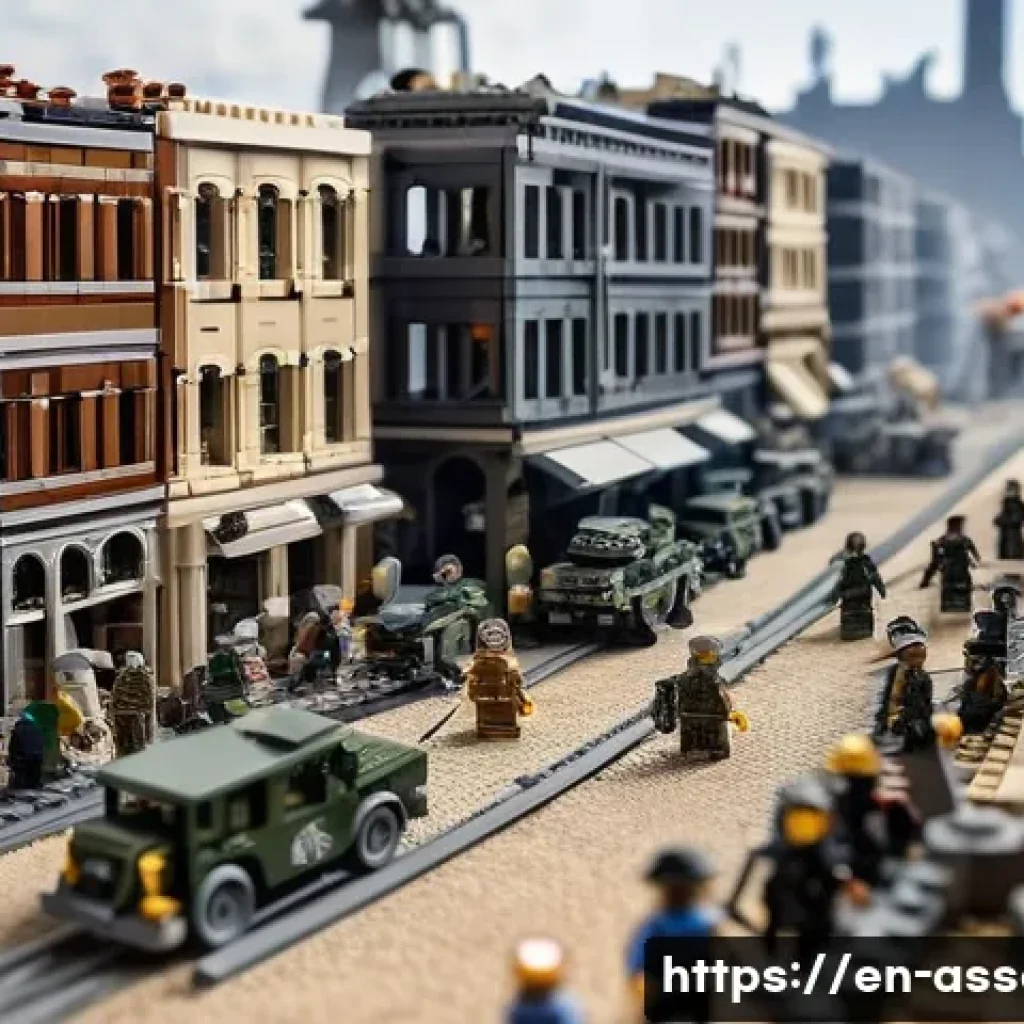
Hey there, fellow creators and dreamers! Remember those days spent hunched over a pile of LEGO bricks, trying to build the most epic spaceship or castle imaginable?
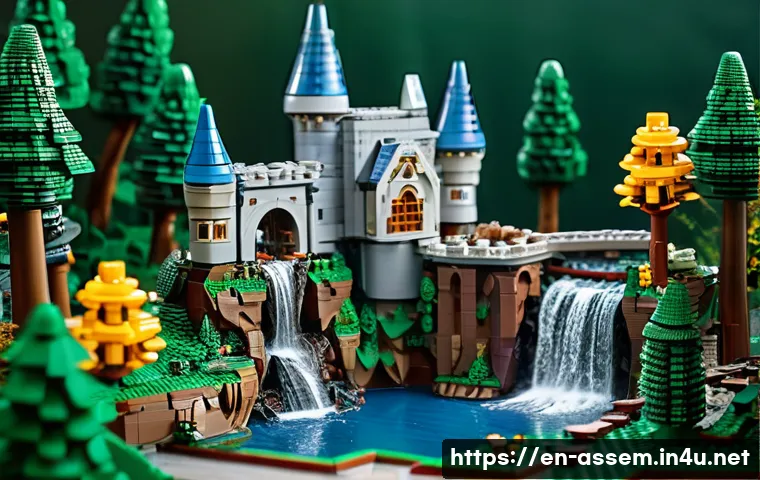
Well, if you thought your childhood creations were grand, prepare to have your mind absolutely blown. I’ve personally witnessed some truly incredible things at various fan conventions and online communities – builders who are taking their passion to an entirely new level, recreating famous battle scenes with a detail that’s frankly unbelievable.
We’re not just talking about a few minifigs and a makeshift wall; these are massive, sprawling dioramas that capture the drama, the chaos, and the sheer scale of historical moments or iconic movie clashes.
It’s an art form, really, where history, pop culture, and engineering beautifully intertwine. The dedication, the hours poured into sourcing the right pieces, and the sheer artistic vision these builders possess?
It’s inspiring. It makes you wonder how much more intricate and interactive these builds will become in the years to come, perhaps even incorporating robotics or advanced lighting to tell their stories in dynamic new ways.
I always find myself scrolling through these galleries, feeling that childlike wonder mixed with genuine awe for their expertise. It’s a testament to the fact that creativity knows no bounds, especially when it comes to those versatile little bricks.
Ready to dive into a world where history and fantasy collide in brick form? Let’s explore it in detail.
Oh, hey there, brick enthusiasts and fellow explorers of miniature worlds! It’s me, your friendly neighborhood English blogger, absolutely thrilled to spill the beans on something that truly sets my imagination on fire: those absolutely breathtaking, mind-blowing LEGO dioramas that tell epic stories.
You know the ones – where history explodes with intricate detail, or fantasy sagas leap right off the page, all crafted from those versatile little plastic bricks.
I’ve spent countless hours scrolling through galleries, wandering convention floors, and even trying my hand at a few ambitious projects myself, and let me tell you, the passion and skill out there are just phenomenal.
It’s like stepping into a miniature universe where every brick has a purpose, every minifigure a role, and every scene a story waiting to unfold. If you’ve ever felt that childlike wonder mixed with genuine awe, you know exactly what I’m talking about.
The Unseen Artistry Behind the Bricks
When you first clap eyes on one of these monumental LEGO creations, it’s easy to get lost in the sheer scale and immediate visual impact. But what really captivates me, after years of admiring these works, is the incredible artistry and planning that goes into them, things you might not even notice at first glance.
It’s not just about stacking bricks; it’s about understanding perspective, color theory, and even subtle narrative cues. I remember seeing a massive World War II diorama once, and the way the builder used different shades of gray and brown for the bombed-out buildings, gradually shifting from intact structures to crumbling ruins, painted such a vivid picture of devastation.
It wasn’t just bricks; it was a masterful stroke of visual storytelling. These builders aren’t just hobbyists; they are artists using a very unique medium, often with a clear vision in mind before they even place the first brick.
Their ability to translate complex historical events or fantastical landscapes into a tangible, brick-built reality is nothing short of magic to me. It’s a testament to how far creativity can push the boundaries of what we traditionally consider a toy.
Crafting Narrative Through Composition
Think about it – every single piece, every minifigure, every small accessory is strategically placed to enhance the story. I’ve learned that composition is king when it comes to these large-scale MOCs (My Own Creations).
It’s about leading the viewer’s eye, creating focal points, and building a sense of movement and drama. A builder might use a dense cluster of minifigures in the foreground, locked in battle, while a sprawling castle dominates the background, drawing your gaze further into the scene.
It’s a delicate dance, ensuring that the details don’t overwhelm the overall narrative but rather support it. I’ve personally experimented with this in my smaller builds, trying to convey a specific moment or emotion, and it’s surprisingly challenging to get right, which makes my appreciation for the master builders even greater.
More Than Just Replicas: Adding Personal Touches
What truly elevates a good build to a great one, in my opinion, is that unmistakable personal touch. It’s when a builder infuses a piece of themselves into the creation, perhaps a unique building technique they perfected, or a quirky detail that only a true fan would spot.
I once saw a fantasy battle where a tiny, almost hidden, gnome was casually observing the chaos from a safe perch, sipping a cup of brick-built tea. It was completely unexpected and added so much character!
These aren’t just replicas; they are interpretations, infused with the creator’s passion and personality. It’s this blend of technical skill and individual flair that makes these displays so endlessly fascinating and keeps me coming back for more.
Beyond the Brick: Storytelling Through Scale
It’s easy to dismiss LEGO as just a kid’s toy, but when you see these monumental dioramas, you quickly realize it’s a powerful medium for storytelling on an epic scale.
We’re talking about recreations of famous historical clashes or vast landscapes from beloved fantasy realms that can stretch across entire convention halls.
I vividly recall walking past a massive Battle of Helm’s Deep diorama at a fan event; it was easily the size of a small car, filled with thousands of Uruk-hai and Rohan soldiers.
The sheer scale allowed the creator to really lean into the grandeur and tragedy of the scene, something you just can’t achieve with a small set. These massive builds aren’t just impressive visually; they draw you in emotionally, making you feel like a tiny observer peering into a pivotal moment in history or fiction.
It feels almost therapeutic, witnessing such intricate worlds unfold before your eyes, a welcome escape from the mundane.
Immersive Worlds and Emotional Impact
The ability of these large-scale MOCs to create an immersive world is truly unparalleled. When I see a detailed trench warfare scene, complete with barbed wire, craters, and weary minifigures, I don’t just see plastic bricks; I feel a pang of historical empathy.
The sheer number of elements and the way they’re arranged work together to evoke a strong emotional response. I’ve seen builders recreate entire cities under siege or sprawling alien landscapes, and each time, it’s a journey for the viewer.
It’s this deep dive into a meticulously crafted world that keeps me hooked, proving that bricks can build more than just structures – they can build narratives that resonate.
Capturing Moments in Time
These large dioramas are like frozen moments in time, snapshots of intense action or quiet contemplation, all rendered in brick form. Think of a famous naval battle, with ships locked in combat, tiny cannons firing, and minifigure sailors scrambling on decks – the scale allows for such dynamic storytelling.
It’s not just about representing an object or a character, but about encapsulating an entire event, with all its drama and complexity. I’ve personally found myself mesmerized by the intricate details of a massive medieval siege, imagining the sounds and chaos, all thanks to the builder’s skillful arrangement of thousands of tiny pieces.
It’s a testament to the power of meticulous planning and a deep understanding of the subject matter.
The Mind-Boggling Dedication to Detail
Oh, my goodness, the details! This is where these master builders truly shine, and frankly, it’s what often makes my jaw drop. We’re not talking about just getting the right color brick; we’re talking about using tiny pieces in innovative ways to create textures, patterns, and architectural nuances that make the scene feel incredibly real, even in miniature.
I’ve seen builders use LEGO fences as ornate railings, car grilles as decorative facades, or even upside-down cheese slopes to create a pebbled path. The resourcefulness is astounding!
It takes an incredible eye, immense patience, and often, a hefty budget to source all those specific pieces. I recently tried to replicate a specific type of cobblestone street in a small MOC, and after hours of trial and error, I gained a whole new appreciation for the builders who do this on a colossal scale.
Their dedication isn’t just admirable; it’s genuinely inspiring.
Innovative Part Usage: The “NPU” Factor
The LEGO community has a term for it: “NPU” or “Nice Part Usage.” It’s when a builder uses a piece in a way completely unintended by its original design, and it absolutely elevates a build.
I’m always on the lookout for these clever tricks. For instance, I once saw a builder use LEGO croissant pieces to create roof tiles on a fantasy cottage – it was genius!
Or tiny LEGO wrench tools meticulously placed to look like intricate machinery gears. These little touches are what separate a good builder from a truly exceptional one, demonstrating a deep understanding of the LEGO system and an unwavering commitment to creative problem-solving.
It’s this ingenuity that keeps the hobby fresh and exciting for me.
Accuracy and Authenticity in Miniature
For historical dioramas especially, the commitment to accuracy is phenomenal. Builders will spend hours researching uniforms, vehicle models, architectural styles, and even terrain features to ensure their creations are as authentic as possible.
It’s like being a miniature historian, but instead of writing about it, you’re building it. I’ve seen World War I trench scenes where the muddy terrain, the sandbags, and even the subtle wear and tear on the soldiers’ uniforms were reproduced with painstaking care.
This pursuit of authenticity isn’t just about showing off; it’s about paying homage to the source material, whether it’s a real-world event or a beloved fictional universe.
It’s this reverence for detail that truly brings these scenes to life for me.
From Digital Designs to Physical Masterpieces
It might surprise some, but many of the colossal LEGO builds we see today actually begin their lives in the digital realm. I’ve dabbled in LEGO Digital Designer (LDD) myself, and while it’s a fantastic tool, it’s nothing compared to the intricate planning that goes into these mega-MOCs.
Builders will spend countless hours, sometimes months, virtually designing every single aspect of their creation, from structural integrity to color palettes, before a single physical brick is even touched.
It’s like an architect drawing up blueprints, but instead of steel and concrete, it’s all about ABS plastic. This process is crucial for managing the sheer complexity and part count of large builds, allowing for iteration and refinement long before the expensive process of acquiring thousands of bricks begins.
I’ve heard stories of builders creating entire virtual models, calculating brick costs, and then breaking the design down into manageable sections for actual assembly.
It’s a logistical marvel, honestly.
The Power of Virtual Prototyping
Digital building software, like BrickLink Studio or the now-discontinued LEGO Digital Designer, has revolutionized the way large MOCs are created. I personally find it invaluable for testing out structural ideas or trying different color schemes without having to constantly tear down and rebuild.
It saves so much time and physical effort. These programs allow builders to access vast libraries of virtual bricks, experiment with countless configurations, and even generate a parts list for their creations.
It’s an essential first step for any truly ambitious project, helping to iron out potential flaws before any real money is spent on bricks. The ability to “see” your creation before it exists physically is a game-changer, and it’s something I always recommend to anyone looking to tackle a big project.
Bridging the Gap: The Transition to Real Bricks
Moving from a perfect digital model to a physical one isn’t always smooth sailing, and believe me, I’ve had my share of “what looked good on screen” moments!
There are always unexpected challenges, like structural weaknesses that weren’t apparent virtually, or subtle color discrepancies between digital renders and real bricks.
This is where the builder’s real experience and problem-solving skills come into play. They have to adapt, improvise, and often make on-the-fly design changes.
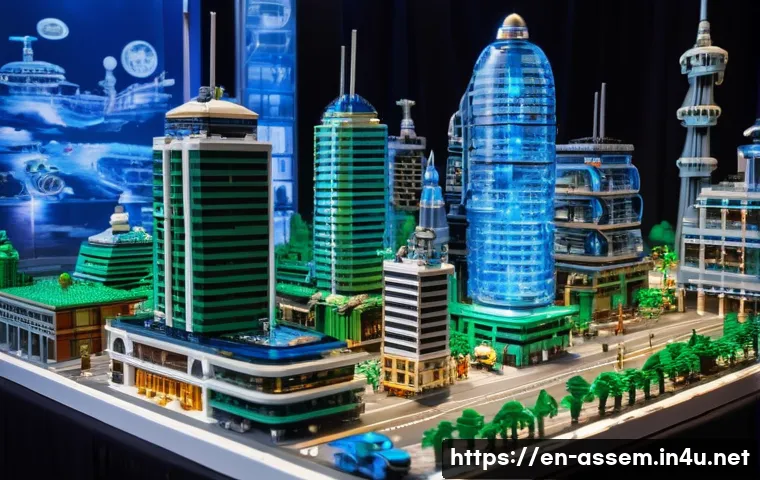
It’s a fascinating dance between planning and spontaneous creativity, a testament to the dedication required. I’ve found that the transition often involves breaking the larger digital model into smaller, manageable sub-assemblies, which makes the physical build process less daunting and ensures stability.
Building Community, Brick by Brick
One of the most heartwarming aspects of this entire LEGO world, especially when it comes to these massive builds, is the incredible sense of community.
It’s not a solitary hobby at this level; it’s a shared passion that brings people from all walks of life together. I’ve seen groups of builders collaborate on colossal convention displays, each person contributing a section, all meticulously planned to fit together seamlessly.
The camaraderie, the shared challenges, and the collective triumph when a project comes together are truly special. It’s like a giant, creative puzzle where everyone gets to add their piece, and the resulting masterpiece is far grander than anything one person could achieve alone.
This collaborative spirit, both online and at physical events, is a huge part of what makes the adult LEGO fan community so vibrant and welcoming.
Collaborative Creations: Stronger Together
When I attend conventions, some of the most impressive displays are often collaborative efforts. Imagine dozens of builders, each working on a piece of a massive city, a sprawling battlefield, or an intricate spaceport.
The coordination required is immense, but the results are always breathtaking. I’ve heard countless stories of builders sharing tips, lending rare pieces, and even traveling across states or countries to bring their sections together for a joint display.
This teamwork not only creates awe-inspiring art but also fosters deep friendships and a strong sense of belonging. It really drives home the idea that our shared passions can connect us in meaningful ways, even if we’re just discussing the best way to hinge a wall or tile a roof.
Sharing the Passion and Inspiring Others
Beyond the large-scale collaborations, the online community plays a massive role. Forums, social media groups, and dedicated websites are bustling hubs where builders share their MOCs, offer constructive criticism, and inspire one another.
I find myself constantly scrolling through these platforms, not just for ideas, but for that little spark of motivation that comes from seeing someone else’s incredible work.
It’s a truly supportive environment, where even a beginner can get advice from a seasoned pro. This exchange of ideas and encouragement is vital for keeping the hobby alive and pushing the boundaries of what’s possible with LEGO bricks.
It’s where I first learned about advanced techniques and found the courage to try my own ambitious projects.
The Future of Fantastical LEGO Landscapes
Looking ahead, I can’t help but feel a surge of excitement for what’s next in the world of large-scale LEGO builds. With technology constantly evolving, I predict we’re going to see even more immersive and interactive displays.
Imagine a diorama where the lights flicker to simulate explosions, where tiny motors make minifigures move, or where advanced projection mapping adds dynamic weather effects to a static scene.
The possibilities are truly endless, and builders are already starting to experiment with these ideas. I’ve seen some incredible examples of builders incorporating complex lighting systems into their castles and cities, bringing them to life in new ways after dark.
It’s going to be a fascinating journey, watching how these creators continue to push the boundaries of what can be achieved with our beloved bricks.
Integrating Technology: Lights, Sound, and Motion
The integration of technology into MOCs is a trend I’m personally super keen on. I’ve already witnessed some incredible builds with intricate LED lighting, bringing a whole new atmosphere to castles, spaceships, and even underwater scenes.
But I can easily imagine builders taking this further, incorporating subtle sound effects – the distant rumble of thunder over a fantasy landscape, or the whirring of engines in a sci-fi city.
Even small, concealed motors could add dynamic elements, like a rotating radar dish or a flickering campfire. These technological enhancements are going to add so many layers of immersion, making the viewer feel even more connected to the story being told by the bricks.
It’s a truly exciting prospect for the future of the hobby.
New Materials and Techniques on the Horizon
While traditional LEGO bricks will always be the heart of the hobby, I’m also curious to see if builders start experimenting more with compatible, custom-molded pieces or even 3D-printed elements to achieve previously impossible details.
The creativity of the community is boundless, and as new manufacturing methods become more accessible, I anticipate a surge in innovative techniques. We might see new ways to create organic shapes, incredibly detailed textures, or even more intricate mechanical functions.
I’m always open to new ideas that expand the creative palette, and I think this willingness to explore new avenues will continue to push the art form forward, resulting in even more mind-blowing creations in the years to come.
Unlocking Your Inner Master Builder
So, after all this talk about awe-inspiring creations, perhaps you’re feeling that little itch to start your own grand project. And you know what? You absolutely should!
I truly believe that everyone has a master builder within them, just waiting for the right inspiration and a pile of bricks. Don’t be intimidated by the colossal scale of some of these builds; every single one of those masterpieces started with a single idea, a single brick, and a willingness to just try.
My own journey into larger builds began with small, experimental scenes, slowly growing in complexity as I gained confidence and learned new techniques.
It’s a process, and the joy is truly in the journey, not just the finished product. Embrace the mistakes, learn from every fallen wall, and let your imagination soar.
Starting Small, Dreaming Big
My best advice, based on my own experience and countless conversations with fellow builders, is to start small. Don’t immediately try to build a life-sized castle!
Pick a scene you love, a small corner of a battlefield, or a single fantasy creature, and just go for it. Focus on mastering a few techniques, understanding how different bricks connect, and getting a feel for structural stability.
Once you’ve got a few smaller successes under your belt, you’ll naturally find your confidence growing, and those bigger ideas will feel much more achievable.
It’s like learning to walk before you can run – every small build is a step towards your personal masterpiece. I started with simple vignettes, and now I’m eyeing a much larger, multi-plate medieval scene!
| Aspect of Large-Scale LEGO Builds | What It Involves | My Personal Takeaway |
|---|---|---|
| Planning & Design | Often starts digitally with CAD software like BrickLink Studio or LEGO Digital Designer. Involves sketching layouts, color mapping, and structural planning. | Absolutely essential! Saved me so much headache (and money) by catching errors before building. |
| Part Sourcing | Acquiring thousands of specific bricks, often from multiple sources like BrickLink, LEGO Pick a Brick, or bulk buys. | Can be a long process, but hunting for rare or specific parts is part of the fun – like a treasure hunt! |
| Structural Stability | Ensuring the massive build doesn’t collapse, using internal bracing, Duplo fillers, and interlocking techniques. | This is where engineering meets art. No one wants their masterpiece to crumble, so foundations are key! |
| Detailing & Gribbling | Using small pieces in clever ways to add texture, realism, and visual interest (Nice Part Usage). | My favorite part! Seeing how a tiny piece can transform a section is incredibly satisfying. |
| Display & Transport | Planning for how the finished MOC will be showcased, often built in modular sections for easy transport. | Crucial if you want to share your work at conventions. Learn from my early mistakes of trying to move a fragile, monolithic build! |
Finding Your Own Voice in Bricks
The beauty of LEGO is that there’s no single “right” way to build. Some people love historical accuracy, others prefer fantastical flights of fancy. Some aim for hyper-realism, while others embrace a more stylized approach.
The most important thing is to find your own style, your own voice, and to build what truly excites you. Don’t feel pressured to follow every trend or perfectly replicate what others are doing.
Your unique perspective is what will make your creations stand out. Experiment, play, and let your personality shine through every brick. When I finally stopped worrying about what others thought and just built what I loved, that’s when my true passion for LEGO building really ignited.
So grab those bricks, unleash your imagination, and start building your own incredible story!
글을 마치며
Well, my fellow brick enthusiasts, what an incredible journey we’ve had through the breathtaking world of colossal LEGO dioramas! It’s clear that these aren’t just toys; they’re vibrant canvases for incredible stories, intricate artistry, and boundless human imagination.
I genuinely hope this deep dive has sparked your own creative fires and perhaps even inspired you to grab some bricks and start building your very own miniature epic.
Remember, every master builder started somewhere, and the magic truly happens when you just dive in and let your passion guide your hands.
알아두면 쓸모 있는 정보
1. Start with a Vision: Before laying a single brick, have a clear idea of what story or scene you want to portray. Sketching out your ideas or using digital design software like BrickLink Studio can save you immense time and effort later on, allowing you to visualize and refine your masterpiece. It’s like mapping out your grand adventure before you even embark!
2. Embrace “NPU” (Nice Part Usage): Don’t be afraid to use LEGO elements in completely unexpected ways. A tiny croissant piece can magically become a roof tile, or a miniature wrench tool can transform into an intricate mechanical detail. Thinking outside the box and experimenting with unconventional part usage is absolutely key to adding unique textures and layers of realism to your builds, truly where the magic of innovation happens!
3. Focus on Structural Stability: Especially for those ambitious, larger-than-life dioramas, planning for internal bracing and ensuring a rock-solid foundation is absolutely crucial. No one wants to see their meticulously crafted masterpiece crumble right before their eyes! Take the time to learn and apply techniques for interlocking bricks securely and distributing weight effectively to guarantee longevity.
4. Join the Community: The global LEGO fan community, both online through forums and social media, and at physical conventions, is an invaluable and incredibly supportive resource. You’ll find an endless wellspring of inspiration, helpful tips and tricks from seasoned builders, and a wonderfully welcoming network of fellow enthusiasts. Sharing your work, asking questions, and learning from others is an incredibly rewarding experience that will fuel your passion.
5. Patience is Your Best Brick: Building large, intricate, and awe-inspiring dioramas takes a significant amount of time, unwavering dedication, and a whole lot of patience. There will undoubtedly be moments of creative frustration or challenges where a section just doesn’t come together as planned, but pushing through those hurdles and ultimately seeing your grand vision come to life is an unparalleled feeling of accomplishment and pure joy. Embrace and enjoy every step of the creative process!
중요 사항 정리
What I’ve truly learned from years of admiring, researching, and occasionally attempting these magnificent LEGO dioramas is that they are so much more than just vast piles of plastic bricks. They represent a unique and captivating fusion of artistic vision, intricate engineering, and powerful storytelling, with each carefully placed brick acting as a word in a grand, visual narrative. The meticulous planning involved, often beginning with advanced digital design, transitions into a physical build process that demands incredible attention to detail, resourcefulness, and undeniable structural ingenuity. From the smallest, most clever “Nice Part Usage” that adds a touch of realism, to the sweeping scale that evokes profound emotions and historical context, every single aspect is carefully considered and executed with passion. And let’s not forget the vibrant, global community that fuels this hobby—a shared passion that fosters amazing collaboration and provides endless inspiration and support for builders of all levels. So, whether you’re a seasoned master builder with years of experience or just starting out with your first large-scale concept, remember that the only true limit is your imagination. Dive in, get creative, and share your incredible brick-built worlds with us—because the pure joy of building, and seeing those incredible stories unfold, is truly an unparalleled treasure.
Frequently Asked Questions (FAQ) 📖
Q: Where do these amazing builders even begin with such monumental projects? What’s the secret to kickstarting a massive, detailed LEGO diorama?
A: Oh, this is a question I’ve pondered endlessly while staring at some of the masterpieces at conventions! It really boils down to a spark of inspiration, just like any creative endeavor.
For many, myself included, it often starts with a scene from a favorite movie, a gripping historical moment, or even a concept from a video game that just sticks with you.
I remember chatting with a builder at BrickFair last year who told me his sprawling Roman legion battle came from a single image in a history book that just screamed, “Build me!”Once that initial idea hits, it’s all about planning.
Think of it like a director storyboarding a film. Most builders will sketch out their ideas, often on paper or digitally using programs like BrickLink Studio.
This helps them visualize the scale, figure out the key elements, and even start a rough parts list. This stage is crucial because it’s where they really iron out the narrative and visual flow.
Then comes the glorious, sometimes maddening, hunt for bricks! Sourcing thousands of specific pieces in the right colors can be an adventure in itself, often involving countless hours on BrickLink or rummaging through bulk bins at local LEGO stores.
It truly takes passion, patience, and a bit of detective work to bring those initial grand visions to life. It’s a marathon, not a sprint, but oh, the joy of seeing it take shape!
Q: Building something so complex must come with a ton of challenges. What are some of the biggest hurdles these master builders face, and how do they manage to conquer them?
A: You are absolutely right! It’s never just smooth sailing, and I’ve heard countless stories of builders battling gravity, budget, and even their own sanity, haha!
One of the absolute biggest challenges is structural integrity. When you’re building a massive diorama, especially one with towering structures or dynamic action scenes, gravity is your biggest foe.
Nobody wants their epic battle scene to collapse mid-display! Builders often employ clever techniques like internal Technic frames, strategic bracing, and even steel supports to ensure everything holds together.
It’s like being an architect on a miniature scale. Then there’s the relentless quest for specific parts and, let’s be honest, the cost. Some rare colors or specialized elements can be incredibly expensive.
I’ve heard tales of builders waiting months for a particular brick to appear on the secondary market at a reasonable price. Managing a budget and being resourceful with alternative pieces is a skill in itself.
Lastly, the sheer time commitment is immense. These aren’t weekend projects; they can take hundreds, even thousands, of hours over many months or even years.
I once saw a breathtaking Lord of the Rings Rivendell build that the artist confessed took him over three years, working nights and weekends. Overcoming these challenges requires not just technical skill but an incredible amount of dedication, problem-solving prowess, and a deep, unwavering love for the craft.
It’s truly inspiring to see how they push through!
Q: Beyond the actual building, how do these incredible artists share their creations and connect with the wider LEGO community? Is there a big social aspect to this hobby?
A: Absolutely! The building is just one part of the journey; sharing it and connecting with fellow enthusiasts is where the magic truly comes alive. In my experience, the LEGO community is one of the most vibrant and supportive out there.
Many builders initially share their work on dedicated online platforms like Flickr, Instagram, Eurobricks forums, or even Reddit’s r/lego community. These platforms are fantastic for getting immediate feedback, advice, and connecting with other passionate creators worldwide.
I often spend hours just scrolling through these galleries, getting lost in the incredible details. But where it really shines is at fan conventions and exhibitions like BrickFair, BrickCon, or the various LEGO Fan Weekends around the globe.
There’s nothing quite like seeing these massive, intricate builds in person, up close, and chatting directly with the artists themselves. The energy at these events is palpable, a true celebration of creativity and shared passion.
It’s also where many builders establish their reputation, gain a following, and even inspire others to start their own ambitious projects. Some even go a step further, creating YouTube channels or personal blogs to document their build process, offer tips, and reach an even broader audience.
It’s a wonderful ecosystem where creativity flourishes, friendships are forged over plastic bricks, and the next generation of master builders is always being inspired.
It’s more than a hobby; it’s a global community.